Common Habitat of Crickets:
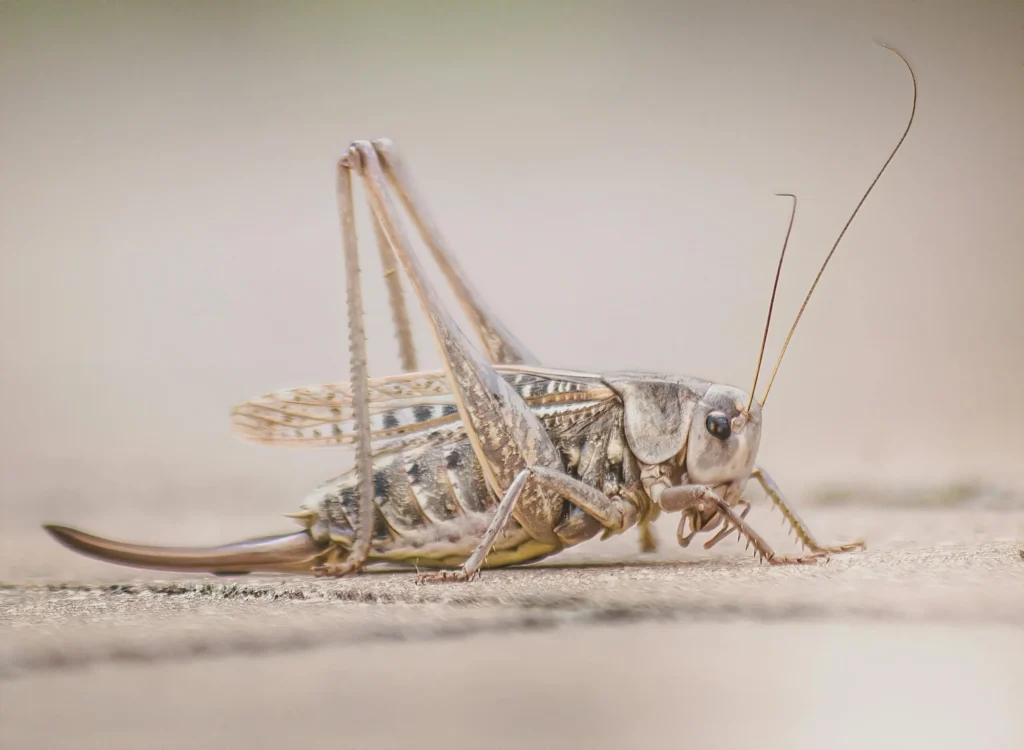
Crickets such as house crickets and field crickets commonly inhabit outdoor landscapes, including lawns, gardens, mulch beds, patios, and under stones or debris. They prefer warm, moist environments and are most active at night. During seasonal changes like spring and fall, crickets may wander indoors in search of shelter, warmth, and food, entering through small cracks, foundation gaps, door thresholds, and window openings. Indoors, they are often found in basements, garages, laundry rooms, and other quiet, undisturbed areas.
Risks & Concerns:
Crickets are generally considered nuisance pests but can still present concerns for homeowners. While they do not transmit serious diseases, they can be noisy and disruptive with persistent chirping. Crickets may also damage fabrics, paper, and stored food products by feeding on them, especially in areas where food is accessible. Large populations indoors can indicate easy access points that should be addressed to prevent other pests from entering.
Signs of Crickets:
Common signs of a cricket infestation include chirping noises at night, especially in quiet areas like basements, attics, and garages. Sightings of multiple crickets in living spaces, along walls, or near light sources are typical indicators. You may also notice small droppings or activity around stored boxes, fabrics, and food packages.
Methods of Crickets’ Prevention:
Preventing crickets from entering your home begins with sealing entry points and reducing favorable conditions. Close cracks and gaps around foundations, doors, windows, and utility penetrations with quality caulking and weather stripping. Minimize outdoor clutter, mulch, and landscape debris directly against the structure. Reducing outdoor lighting at night and addressing moisture issues around foundations can also make your property less attractive to crickets. Routine exterior pest control treatments help reduce outdoor populations and lower the likelihood of indoor migration.



 March 31, 2026